How Digital Crew Management Cuts Roofing Project Delays by 40%
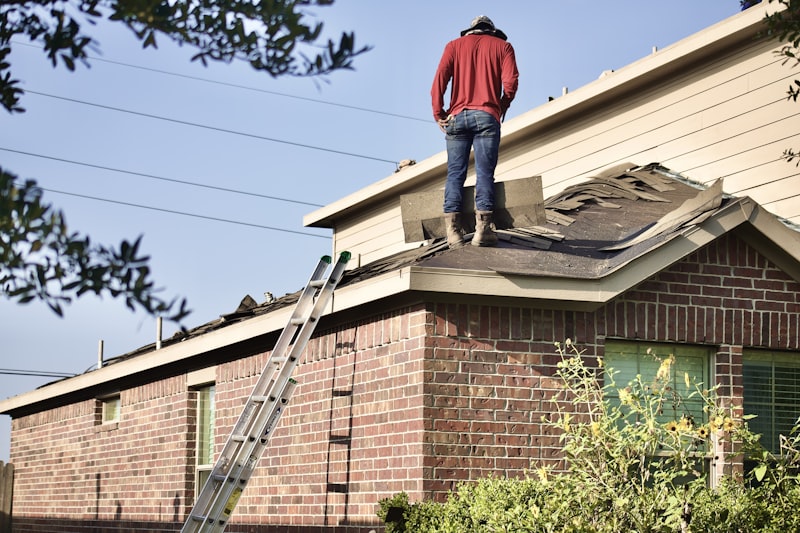
It's 6:14 AM on a Monday in July. Your phone is already buzzing. Three crews are supposed to be rolling out in 45 minutes, but one foreman just called in sick, a homeowner from last week is demanding a callback, and the materials for the Elm Street tear-off never showed up.
You pull up the whiteboard. Half the names are smudged. The group chat has 47 unread messages. Your dispatcher is on the other line trying to figure out which crew has the extra nail gun.
Sound familiar? You are not alone. This is Monday morning for thousands of roofing operations across the country. And it is costing them far more than they realize.
The Scheduling Chaos Problem
Every roofing contractor knows the drill. A storm rolls through, the phone starts ringing, and within 48 hours you have more leads than your crews can handle. The whiteboard fills up, text messages pile in, and suddenly nobody knows which crew is heading where tomorrow morning.
Scheduling chaos is the silent killer of roofing profitability. When crews show up at the wrong address, materials arrive a day late, or a customer sits home waiting for a team that never comes, the costs compound fast.
"When your operation runs on sticky notes and group texts, delays aren't a risk — they're a guarantee."
The root cause is almost always the same: disconnected information. Job details live in one spreadsheet, crew availability in someone's head, and customer communications in a third place entirely. Every handoff between those silos is a chance for something to slip through the cracks.
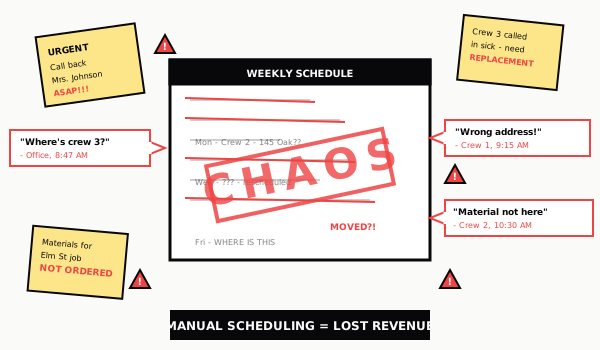
Sound familiar? This is what scheduling looks like when your tools can't talk to each other.
Scheduling chaos is not a people problem. It is a systems problem. Even the best dispatchers cannot outperform a broken workflow.
The Real Cost of Disorganization
Most roofing companies drastically underestimate how much money they lose to scheduling inefficiency. It is not just the obvious stuff like wasted drive time. The hidden costs are what really add up.
A single wasted crew day does not just cost you labor. It costs you the revenue from the job that did not get done, the customer satisfaction hit from the delay, and the compounding effect on every job behind it in the pipeline. For a crew of four, that easily runs $1,200 per day in lost productivity.
Multiply that by two or three scheduling mishaps a week, across a storm season that lasts three months. You are looking at six figures in preventable losses before you even account for the bad reviews.
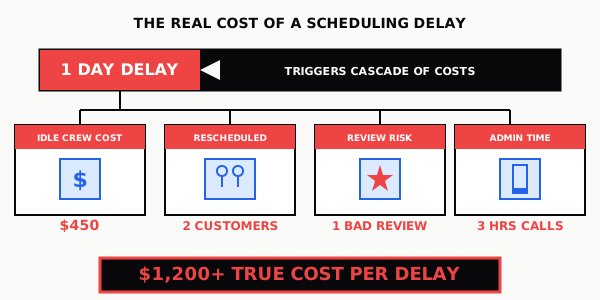
One day of scheduling chaos ripples into $1,200+ in true costs when you account for everything.
A 12-crew roofing operation in Dallas was running 3 crews on storm damage jobs after a major hail event. Without a centralized system, they averaged 2.5 scheduling conflicts per week, each one costing a half-day of lost labor. After moving to digital crew management, conflicts dropped to fewer than 2 per month. That single change recovered over $14,000 in billable hours during the first quarter alone.
A Smarter Way to Manage Crews
Digital crew management replaces the guesswork with a single source of truth. StrutQ's crew management module gives roofing operators a real-time view of every crew, every job, and every deadline in one dashboard.
Dispatchers can assign jobs based on crew location, skill set, and current workload rather than scrolling through a thread of text messages. When a job gets rescheduled due to weather, the change ripples through the entire system automatically.
Crews get updated assignments on their phones. Materials delivery adjusts accordingly. The homeowner receives a notification without anyone picking up the phone. That single workflow eliminates the three or four manual touchpoints where delays typically creep in.
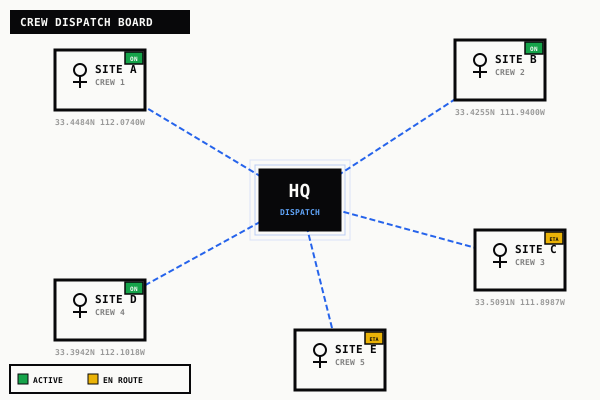
How StrutQ's dispatch system routes crews to jobs based on location, availability, and skill set.
One dashboard. One source of truth. Every crew, every job, every deadline. That is the difference between reacting to problems and preventing them.
How Digital Dispatch Actually Works
It is one thing to talk about "digital transformation." It is another to see exactly how it works on a Tuesday morning when three jobs are running simultaneously and the weather just changed. Here is the typical flow.
A new lead comes in from a storm damage inspection. The CRM captures the address, photos, scope of work, and customer contact info. It is immediately visible to dispatchers.
The dispatcher sees which crews are available, where they are located on the map, and what jobs they are already booked for. They drag the job to the best-fit crew. Done in seconds, not minutes.
The foreman gets a push notification with the job details, address, customer notes, and materials list. No phone calls needed. No confusion about which job is next.
GPS-verified check-ins confirm when the crew arrives, starts work, and completes the job. The office sees progress without making a single call. The customer gets automated updates.
If rain rolls in, the dispatcher reschedules the affected jobs. Every downstream change propagates automatically: crew assignments shift, materials delivery windows update, and homeowners get notified instantly.
Keeping Customers in the Loop
Delays frustrate homeowners. But silence makes it ten times worse. The number-one complaint on roofing company review pages is not about the quality of the work. It is about communication. "Nobody called me back." "I had no idea when they were showing up." "I took a day off work for nothing."
"The number-one driver of bad roofing reviews isn't bad roofing. It's bad communication."
The CRM built into StrutQ ties crew schedules directly to customer records. When a project milestone is completed, the homeowner gets notified automatically. When a delay happens, they hear about it before they have to call and ask.
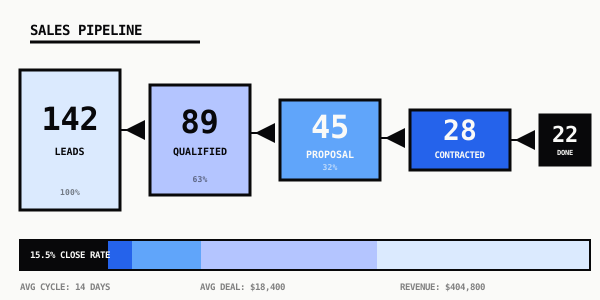
StrutQ's CRM pipeline connects crew activity directly to automated customer updates.
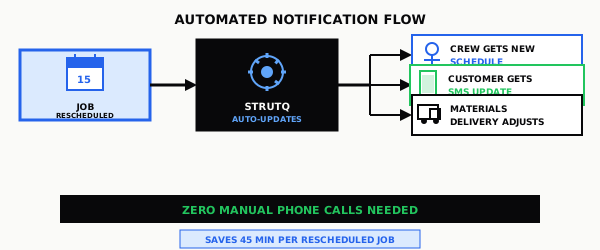
One change triggers three automatic updates. No phone calls, no missed messages.
That level of transparency turns a frustrating experience into a professional one. It protects your online reputation. And it generates the kind of five-star reviews that bring in referrals without you spending a dime on advertising.
Proactive communication is not a nice-to-have. It is the single fastest way to protect your online reputation and generate repeat business.
Old Way vs. StrutQ Way
Here is what the shift actually looks like in practice. Every row below represents a daily pain point that disappears when you centralize your operations.
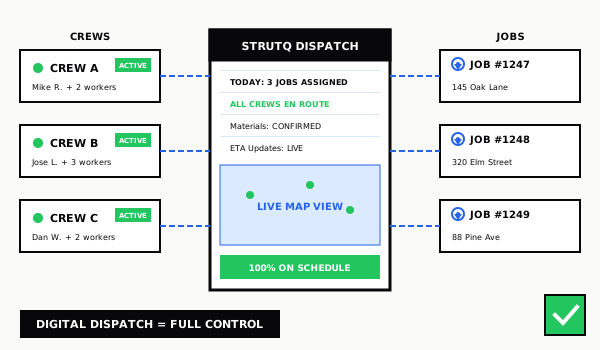
With StrutQ, every crew, job, and status lives in one clean dashboard. No more chaos.
Key Benefits for Roofing Operations
Roofing is not like other trades. You are dealing with weather dependency, seasonal volume spikes, multi-crew coordination, and homeowners who expect Amazon-level communication. Here is how digital crew management addresses each of those challenges.
Real-time crew visibility prevents double-bookings and wasted drive time between job sites. You see who is where, what they are working on, and when they will be free. No more guessing.
When severe weather hits, dispatch crews to the highest-priority jobs instantly based on location and availability. First-mover advantage in storm markets means more signed contracts.
Automated status updates keep homeowners informed without tying up your office staff on the phone. They know when the crew is coming, when work starts, and when the job is done.
Intelligent scheduling fills gaps in the calendar so crews spend more hours on roofs and fewer hours waiting for the next assignment. More roof time means more revenue per crew per week.
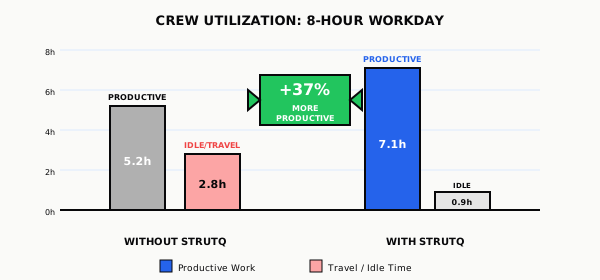
Crews spend 37% more time on roofs and 68% less time sitting idle when dispatch is digital.
Getting Started in 3 Steps
Making the switch does not require shutting down your operation for a week. Most roofing companies are fully operational on StrutQ within a few days. Here is what the onboarding looks like.
We learn about your operation: how many crews, what trades, what geography, and what pain points keep you up at night. No pitch deck. Just questions.
Your crews, job types, service areas, and communication templates get loaded into StrutQ. We handle the setup so you can focus on running your business.
Your dispatchers and foremen get a hands-on walkthrough. Within the first week, most teams report that they wonder how they ever ran without it.
"The best time to fix your scheduling was last storm season. The second best time is before the next one hits."
You do not need to overhaul everything at once. Start with dispatch and crew tracking. The ROI shows up in the first week.
Field-tested operational insights from the team building the most aggressive ops platform in construction.